

Looking at the sky since childhood: AstroDaniela’s journey to bring astronomy closer to children
Posteado
Cielos Chile
schedule Tuesday 02 de September
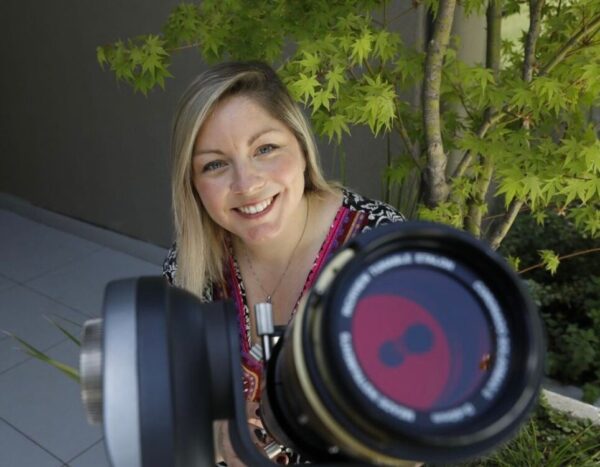
With a mixture of play, storytelling, and experimentation, astronomer Daniela Fernández (@astrodaniela) promotes science from early childhood and highlights the role of women in this field.
From Antofagasta, with the sea in the background and a starry sky that fell upon her every time the power went out, Daniela Fernández began to forge her fascination with the universe. She was only 14 when she decided to become an astronomer, inspired by a visit from a former student to her school. “From that day on, I was hooked on astronomy,” she recalled.
Daniela studied astronomy at the Catholic University and later specialized with a master’s degree in scientific communication at Pompeu Fabra University in Barcelona. Today, she works as a telescope and instrument operator at Las Campanas Observatory and leads the Pequeñas Grandes Estrellas Foundation, which teaches astronomy to preschool children. She is also the creator of the AstroDaniela (@astrodaniela) project, a digital window that showcases her work as a scientist and communicator.
An astronomer’s journey into education
During her years of study, Daniela discovered that her passion went beyond astronomical research. While working at a tourist observatory, she learned to communicate science to different audiences and found an unexpected but revealing path in education. That vocation was consolidated after a workshop with three-year-olds, an experience that led her to create the Pequeñas Grandes Estrellas Foundation.
Over time, seeing the potential of social media, she launched AstroDaniela: a public account where she shares her work at the observatory, her workshops, and her role as a scientist. “I wanted to be the role model I lacked at age 14. A female scientist, approachable, who they could ask what an astronomer really does. To show that we are also people, with challenges, passions, and yes, sometimes with imposter syndrome,” she emphasized.
For her, introducing science at an early age can make a profound difference. “I fully believe that it will help them, and we will create adults who are more aware of the environment in which they live. I don’t need everyone to be an astronomer or scientist, but I do need them to understand what is happening around them and why things happen,” she explained.
How do you teach astronomy to young children?
Daniela’s interest in teaching astronomy to such young children stems from her admiration for their curiosity and freedom to ask questions. “They are easily amazed and, through play, they incorporate critical thinking and the scientific method almost without realizing it,” she said.
That doesn’t mean it’s all easy, because adapting such abstract concepts as galaxies or black holes to a child’s language has been a challenge in itself. AstroDaniela’s approach combines experimentation, crafts, accessible vocabulary, and a theatricality necessary to capture the attention of three- to five-year-olds. “You have to bring out your inner child, talk with your hands, as if you were in a play,” she said.
More women looking at the sky
Along the way, Daniela Fernández has also understood the importance of making women visible in science. “When I was a girl, the role models in books were men who lived 100 years ago. Today, there are many women showing what they do, and that has brought science closer to new generations,” she said.
The impact of this work is evident. The astronomer mentions Josefa Hidalgo, a girl she met on social media who now writes astronomy books with her: “My goal is to show them that they can be whatever they want to be, in whatever field they want, from dancers to musicians, astronomers, paleontologists, doctors, whatever.”
Looking at the sky as a right
83% of the world’s population lives under light-polluted skies, a reality that limits astronomical observation, but also the possibility for more children to connect with the universe through something as simple and powerful as looking at the stars. “Chile should be known for having the cleanest skies in the world. Not just Easter Island or Torres del Paine. The skies are part of our heritage,” Daniela posited.
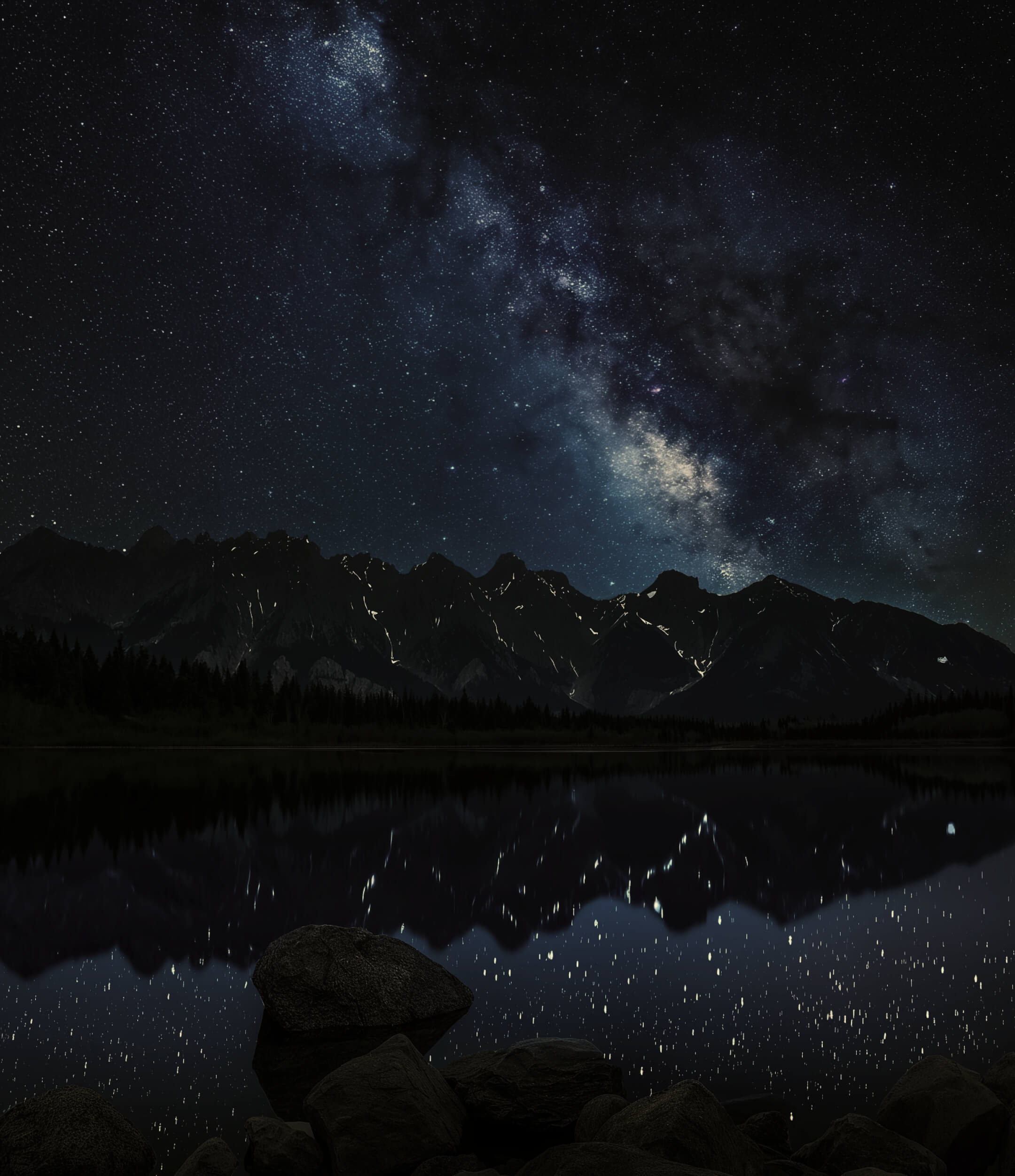
From her platform, she has developed content that addresses this issue, such as La Leyenda de la Yacana (The Legend of the Yacana), a story that revives the tradition of observing dark constellations in northern Chile. Looking up at the sky again, as she did in her childhood in Antofagasta, remains an essential experience for her. “I am lucky to work at the observatory and see the Milky Way every time it passes overhead. Despite light pollution, it is still possible. And we must take care of that,” she insisted.

Subscribe to our newsletter
Receive relevant information about the skies of Chile every month