...

Between May 13 and 15, the Sala de Cámara in Copiapó became the epicenter of astrotourism in Chile. Fundación Cielos de Chile participated as a speaker with its presentation “Sky Protection: A Regulatory and Civic Challenge”.

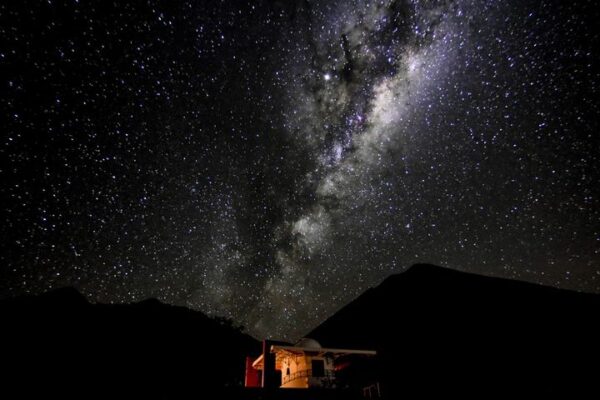
The International Astrotourism Summit Atacama, organized by CORFO Atacama with the support of the Regional Government, brought together tourism entrepreneurs, researchers, public institutions, and international actors in a three-day seminar covering everything from global trends in the astrotourism sector to regulatory and civic challenges for the protection of dark skies. The Atacama region, with more than 300 clear nights per year, low humidity, and a geography that makes it unique in the world, was the natural setting for this gathering.

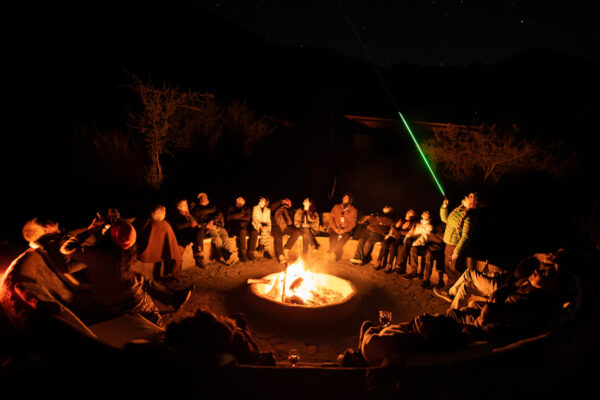
The program included panels on global astrotourism trends, experiences in local communities, scientific discoveries serving the sector, and the design of innovative tourism experiences. The summit concluded with the creation of the Regional Astrotourism Network, along with activities such as the Astrotourism Expo, a nighttime Star Party, and the Astrofest organized by the Municipality of Copiapó.

Fundación Cielos de Chile actively participated in the panel dedicated to dark sky protection, where Executive Director Daniela González presented concrete tools, regulatory advocacy strategies, and a call to action directed at both tourism operators and citizens.

Three Key Messages from the Foundation

González’s presentation articulated a vision that goes beyond scientific outreach, positioning dark sky preservation as a structural condition for the region’s economic and social development.

Dark skies are heritage and laboratory: The Foundation insists on understanding dark skies not only as an economic resource, but as scientific, cultural, and socioenvironmental heritage that must be preserved for future generations. The northern territories of Chile are so unique that their skies rank among the most pristine in the world. But that condition, González emphasized, is at risk: light pollution growth rates are alarming, and reversing them will only be possible through citizen participation, changes in lighting habits, and advocacy in public policy.

The new lighting regulation is an opportunity, not a restriction: Chile has had lighting regulation since 1998, but the current version represents a qualitative leap. For the first time, the Ministry of the Environment recognizes that human health and biodiversity are affected by exposure to artificial light, extending the regulation’s scope to the entire national territory. González outlined the six types of lighting it covers — pedestrian, vehicular, ornamental, sports, advertising, and industrial — and explained the spirit behind each: not to turn off the lights, but to illuminate with purpose. However, she warned that adoption has been low: as of August 2025, 44% of public lighting tenders in the municipalities where the regulation is already in force did not include the provisions of the corresponding supreme decree. The challenge, she said, is to become active agents of compliance.

Citizen science as a monitoring tool: During the presentation, González introduced Glowatch and its citizen walks — a citizen science initiative that allows people to report sources of light pollution through photos and geolocation via WhatsApp. The goal is to build an urban-scale map of the state of light pollution in the region’s cities.

Astrotourism Operators as Environmental Assessment Actors

The legislation governing the Environmental Impact Assessment System (SEIA) includes a specific article requiring projects to demonstrate that they will not affect productive activities in the territory, such as astrotourism. As González explained during her presentation: “projects must demonstrate that they do not generate an impact on tourism productive activities, and that is where your sector comes in”.

This opens a concrete channel of participation for operators: they can exercise their rights within the environmental assessment process when a project threatens their operating conditions. In the case of Environmental Impact Declarations, where citizen participation is not automatic, the law allows it to be opened if at least two organizations formally request it, initiating a 60-day process. “Let us use the tools we have available”, was her direct call to the audience.

The Astrotourism Portal: A Platform for the Ecosystem

The Foundation presented the portal astroturismo.cieloschile.cl at the Summit, a free platform that has been operating for one year and concentrates the astrotourism offer from across the country. With more than 80 active providers between Iquique and Puerto Montt, it allows travelers to find experiences through practical filters: type of activity, language, schedules, accessibility for people with reduced mobility, and pet-friendly options, among others.

Beyond its utility for visitors, the portal is a commitment to the cohesion of a geographically dispersed ecosystem. The Foundation acknowledged that in the Atacama Region there are still operators yet to register, and invited those present to join. Access is completely free for both providers and users, and it is optimized for desktop use.

Forma olas blancas

Subscribe to our newsletter

Receive relevant information about the skies of Chile every month